
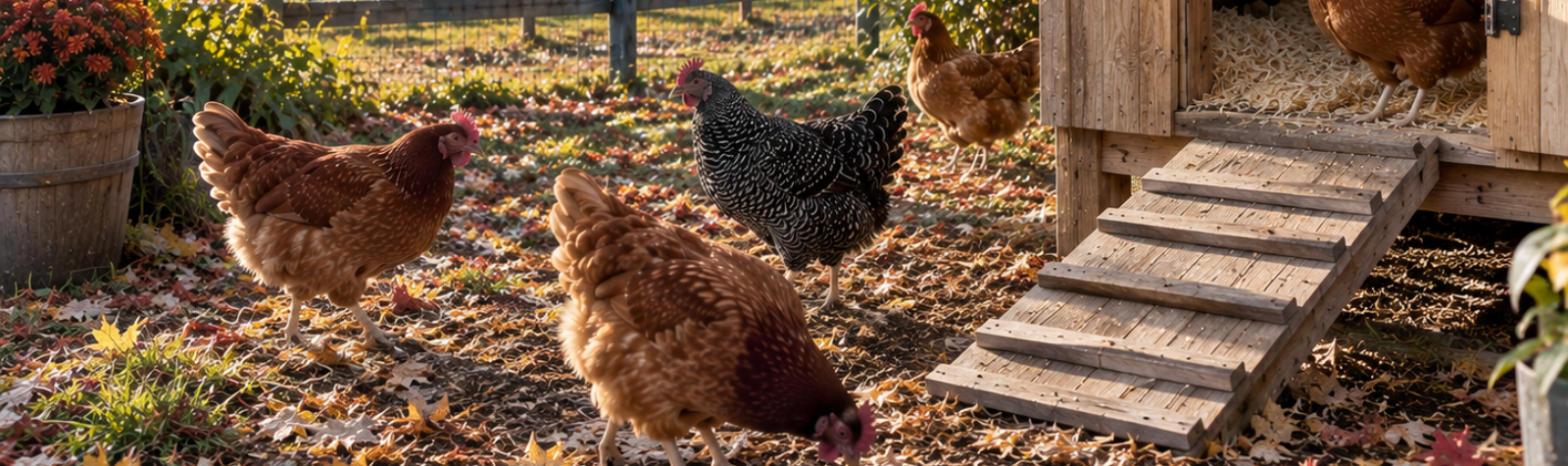
The days are getting shorter, the morning air has an edge to it, and the coop suddenly looks like a feather pillow exploded inside. Molting season is here, and winter isn’t far behind.
Cold weather isn’t actually what hurts chickens most in winter. Moisture, ammonia buildup, and stress are the real threats. A drafty, damp, smelly coop in November is a breeding ground for respiratory illness, and by the time the ground freezes it’s too late to fix it properly. A few hours of coop prep in September is what keeps your flock laying and healthy straight through spring.
Here are the 4 steps to winterize your coop before first frost.
1. Do the Final Deep Clean of the Year
Before layering on winter bedding, start with a clean slate.
Pick a sunny, dry morning. Haul out all the old litter, scrape down the roosting bars, and sweep every corner. Wash the floor and walls with a natural cleaner, then leave the doors open until everything is completely dry, ideally a full day.
This is also your best window to inspect the structure. Look for gaps at the floor line wider than a half-inch, which is enough space for mice or weasels to squeeze through once food gets scarce outside. Repair loose wire mesh now, while your fingers still work in the cold.
2. Lock Down Moisture and Ammonia
Once the floor is dry, most keepers throw down fresh pine shavings or straw and call it done. That’s the mistake. In winter, birds spend far more time inside, producing concentrated manure in a space with reduced ventilation.
Ammonia doesn’t just smell bad. At levels as low as 25 ppm, which is well within range for an unmanaged coop by midwinter, ammonia starts to burn a chicken’s respiratory tract and suppress its immune response right when it needs it most.
A dry bedding conditioner is what actually prevents this instead of just masking it.
Before putting down fresh bedding, sprinkle Dr. Connie’s Odor-Lok directly onto the clean coop floor, concentrating it under the roosting bars where droppings collect overnight. Reapply every time you refresh bedding through fall and winter. It stops ammonia gas from forming in the first place and keeps bedding dry longer.
3. Balance Drafts vs. Ventilation
One of the most common new-keeper mistakes is sealing the coop up like a cooler.
Chickens generate a surprising amount of heat and moisture just from breathing and roosting. If that moisture has nowhere to go, it rises, condenses near the roofline, and freezes onto combs and wattles, which is how frostbite happens.
- Drafts (wind hitting birds directly at roost height) are bad.
- Ventilation (air exchange up near the roofline, above the birds) is essential.
Check that high vents are clear of cobwebs and dust so humid air can escape. Seal gaps at roost level, but keep roof eaves open year-round.
4. Support Them Through the Molt
Growing new feathers is one of the most energy-intensive things a chicken’s body does. Protein demand spikes in September and October, which is exactly why egg production drops during molt.
Help hens move through it faster:
- Switch to a feather-fixer feed with 18-20% protein, or supplement with dried mealworms as an afternoon treat.
- Add probiotics and electrolytes to their water twice a week to support gut health during the physical stress of molting.
- Keep a natural wound repair spray in your coop caddy. Bare, pin-feathered skin invites pecking from flockmates, and catching a bare spot in its first day or two prevents it from becoming a bigger flock injury.
Frequently Asked Questions
Do chickens need supplemental heat in winter? Most cold-hardy breeds tolerate temperatures well below freezing without added heat, as long as the coop is dry and draft-free at roost level. Supplemental heat is rarely necessary and can even increase moisture and fire risk.
How cold is too cold for chickens? Healthy adult chickens with access to shelter can generally handle temperatures down to 0°F. Frostbite risk comes primarily from moisture and wind exposure, not the temperature itself.
How often should I clean the coop in winter? Do a full clean-out in fall before the first freeze, then spot-clean and add fresh bedding with an odor conditioner like Odor-Lok every 1-2 weeks through winter, more often in high-traffic areas under the roost.
Why do chickens stop laying in winter? Two main reasons: shorter daylight hours reduce the hormonal trigger for laying, and molting redirects protein and energy toward feather regrowth instead of egg production.
Get Ahead of the Freeze
Winter homesteading rewards preparation over reaction. An afternoon spent getting your bedding strategy right, managing ammonia, and supporting your flock’s gut health now will save you time, money, and heartache once the snow starts flying.
Give your coop a good scrub this weekend, sprinkle down some Odor-Lok, and give your hens the foundation they need to stay strong all winter.
Everything you need is in our Chicken Care Bundle Kit.
